
Yard signs & display planning
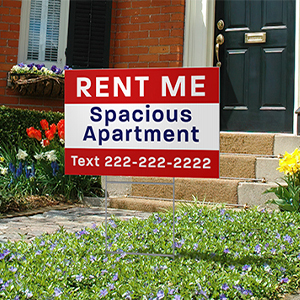
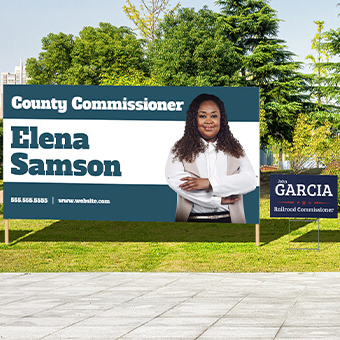
Yard sign placement starts with what the viewer needs to know. A sign announcing a business, marking an event entrance, or pointing toward a pickup area has a different job, even when the printed panels are the same size.
Before ordering custom yard signs, walk through the display plan. Consider the approach, wording, printed sides, and holder together so each sign has a useful position and a clear message.
Give each yard sign one main job
Start with the question the sign should answer. “What business is here?” calls for a recognizable name and service. “Where do I check in?” calls for a destination and, where necessary, a direction.
A destination marker confirms that visitors have arrived. A directional sign belongs where they need to choose the next part of the route. Separate these roles when they require different positions rather than asking one panel to communicate everything.
Use locations you have permission to use and confirm any applicable local placement requirements before finalizing the plan.
| Sign purpose | Message to prioritize | Placement check |
|---|---|---|
| Identify a business | Business name and main service | The sign is visible from the intended approach. |
| Guide event visitors | A destination and a clear arrow | Viewers can see it before choosing the route. |
| Mark an entrance | The entrance or activity name | The location matches the wording. |
| Announce a promotion | The main offer and essential timing | The message is current and readable. |
On a small screen, scroll the table sideways. Adapt these examples to your approved display locations.
Check the approach before choosing the angle
Review a proposed location from the places people will actually view it. Look for shrubs, parked vehicles, other signs, or site equipment that may cover the panel. A clear view beside the sign does not guarantee a clear view from the approach.
Compare the sign’s orientation with the direction of the viewer. A panel aligned neatly along a boundary may be difficult to read from another angle. Test the intended position rather than choosing it only because it looks tidy from the building.
For event directions, walk the route as a first-time visitor. If the arrow becomes visible only after the turn, adjust the plan. Keep the panel and holder clear of walking routes and leave existing site information visible.
Choose printed sides around the intended views
SOTC offers single- and double-sided yard sign options. A single-sided panel can suit a location with one intended viewing direction. Compare double-sided printing when people need to read the message from both sides.
Check each face separately when the artwork includes an arrow. The correct direction depends on where that viewer is standing. Repeating the same file on both faces may not communicate the intended route from both viewpoints.
Label the artwork and installation plan so the setup team knows which face belongs toward each approach. This is especially useful when several similar signs have different directions.
Review the sign size and wording together
Choose a panel size that fits the location, holder, and amount of essential wording. SOTC lists multiple rectangular formats and other shapes; review the exact dimensions and orientation in the selected product template.
Give the main message a clear visual priority. Use readable letter shapes and strong contrast, and keep optional detail from competing with the headline. A short destination name can be more useful than a full list of activities.
Preview the layout at a realistic scale and inspect it in the proposed setting. If important details remain difficult to understand, simplify the wording or reconsider the format and position.
Match the panel material to a compatible holder
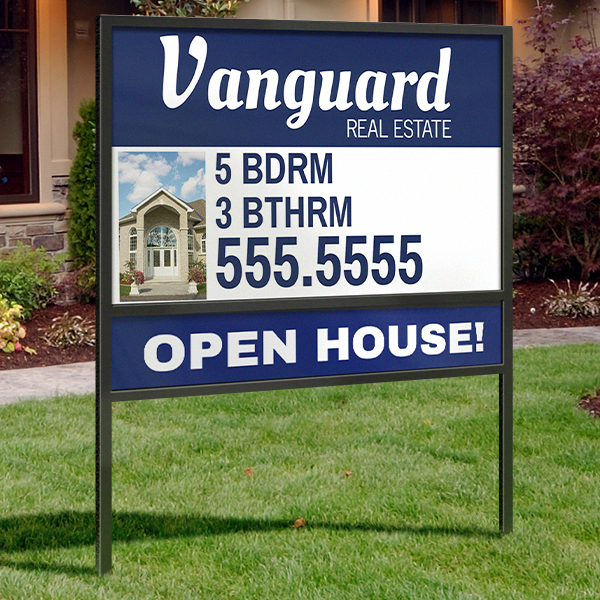
Select the panel and display hardware as one system. SOTC describes wire stakes as an option for compatible corrugated plastic signs. Confirm that the selected yard sign stake suits the panel and intended setup.
For other configurations, compare sign holders and frames. Check the supported dimensions, material, and attachment method. Do not assume that a holder for one size or panel type will fit another.
The holder’s listed dimensions are different from the printed panel dimensions. Review the assembled display and site conditions, then follow the product-specific installation guidance. Confirm what is included in the order before setup day.
Build an inventory around useful placements
Count the locations and intended approaches before deciding how many signs to order. A single well-positioned marker may cover one need, while a route with several decisions may require separate directional messages.
Give each placement a simple reference, such as “Entrance A” or “Registration Turn.” Record its message, artwork version, printed sides, panel size, holder, and assigned setup location.
For temporary displays, add installation and removal dates. Keep the approved files with the inventory so a replacement order uses the current wording and the correct arrow.
Inspect the display after installation
Repeat the approach check with the sign in place. Review the full panel, orientation, holder, and surrounding space. Look again when the site is operating, because queues and parked vehicles can change the view.
Arrange regular checks for movement, damage, obscured wording, and outdated messages. Follow the selected product’s guidance as conditions change. A sign that worked in the original layout may need attention when landscaping or site activity changes.
Use visitor questions and staff observations to improve the next plan. If several people miss the same entrance, review the message and location together.
Yard sign placement checklist
- Each sign has one defined purpose.
- The location is approved and relevant placement requirements are checked.
- The message is visible from the intended approach.
- Printed sides and arrows match each viewing direction.
- The panel and holder are compatible.
- The complete display leaves walking routes clear.
- Temporary messages have a removal date and a person responsible for checking them.
Frequently asked questions
Where is the best place to put a yard sign?
Choose an approved location where the intended viewer can see the message when it is useful. Check the approach, obstructions, panel orientation, and complete display rather than relying on one universal placement rule.
Do I need double-sided yard signs?
Consider double-sided printing when the sign needs to communicate from two sides. Review each face, particularly if the design contains arrows or other directional information.
How many yard signs should I order?
Build the quantity around the locations, approaches, and messages in your plan. Check existing site information and avoid ordering multiple signs for the same need without a clear reason.